Find Out How to Set Your Goal Now - Part 2 - Sail
In Part 1, we talked about finding your direction — knowing where you actually want to go. But knowing your destination is only half the work. The other half is navigation. And navigation is a skill most people never learn because they assume the path forward will be obvious once they've decided where they're headed.
It rarely is.
The Canoe and the Compass
Imagine you're in a canoe on a wide river. You've decided you want to reach the far bank — a specific point you can see in the distance. You know exactly where you want to go. Now what?
You paddle. But the river has currents. Wind pushes you. Other boats create waves. The direct line from here to there isn't straight — it curves and adjusts in response to everything around you. If you only ever paddle in a straight line, you'll be fighting forces that could actually help you if you understood them. If you never look up from the water, you'll drift off course without realising it.
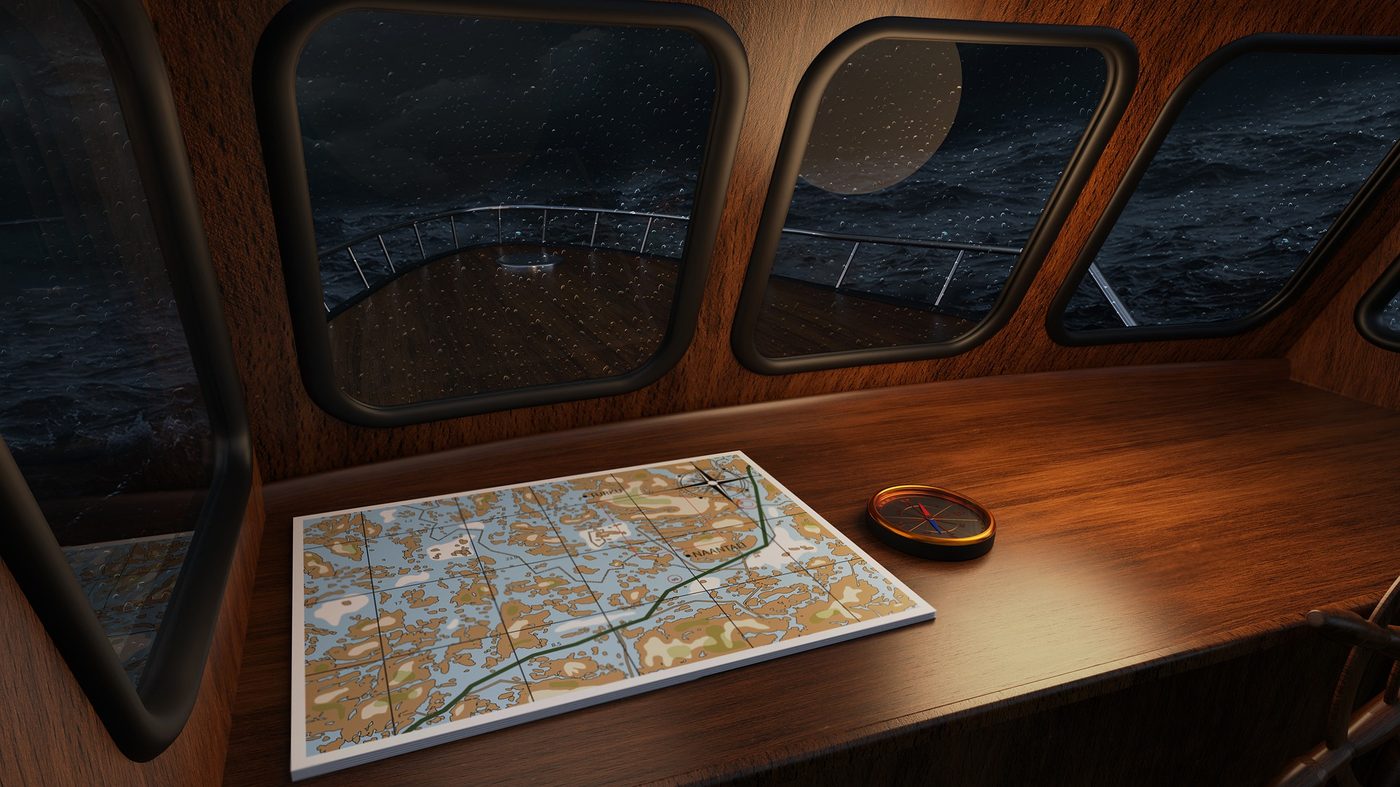
Goal-setting works the same way. The destination is the point on the far bank. The compass is your clarity about what that destination means to you — why it matters, what it looks like in specific, measurable terms. And the paddle? That's your daily action.
Most people have a vague idea of the destination and no compass. They work hard — they paddle — but without clear direction, effort alone doesn't get you there. It just gets you tired.
Setting the Compass: What a Real Goal Looks Like
A goal isn't "I want to be healthier" or "I want more money." Those are wishes. A goal is specific enough that you'd know, unambiguously, whether you've achieved it.
"I want to have £10,000 in savings by December 31st of this year" is a goal. You can track it weekly. You can calculate exactly what you need to save each month. You can see, at any point, whether you're on course or off.
"I want to run a 5K without stopping by June" is a goal. You can build a training plan. You can test yourself. There's a clear finish line.
Vague intentions are comfortable because you can never technically fail them. But you can never truly achieve them either. Specificity is what makes a goal real — and what gives you a compass to navigate by.
Obstacles Are Part of the River
Here's what nobody puts in the motivational posters: when you commit to a real goal, obstacles appear. Not because the universe is against you, but because growth and resistance go together. The moment you say "I'm going to do this," reality starts stress-testing whether you mean it.
Your canoe will hit rough patches. You'll have weeks where you don't make progress. You'll face situations that seem to pull you backward. This is not a sign that you're doing it wrong. It's a sign that you're doing something that matters.
The question isn't how to avoid obstacles — it's how to navigate them. And navigation requires two things: staying connected to your destination (why does this matter to me?) and being flexible about the route (how do I get there given what's in front of me right now?).
The canoeist who survives the rapids is not the one who pretends they don't exist. It's the one who reads the water, adjusts in real time, and keeps paddling.
Check Your Compass Regularly
Goals need to be revisited. Not changed at the first sign of difficulty — that's just quitting with extra steps — but genuinely re-evaluated as you gather real information from the journey.
Every month or so, sit down and ask honestly:
- Am I still heading in the right direction?
- Has anything changed that means I need to adjust the route?
- Is the destination still right, or have I learned something that changes what I actually want?
- What's worked? What hasn't? What do I need to do differently?
This isn't weakness. This is good navigation. The best sailors don't sail a fixed course regardless of the weather. They know their destination and they adjust their route constantly based on real conditions. They arrive because they're paying attention.
The Drift Nobody Talks About
The biggest risk isn't hitting a major obstacle. It's the slow drift that happens when you're not paying attention. A degree off course doesn't look like much at the start. Over months and years, it puts you somewhere completely different from where you were trying to go.
Life has a way of filling every available space. Urgent things crowd out important things. Comfortable habits replace deliberate action. Before you know it, a year has passed and you're still roughly where you were — not because anything dramatic happened, but because nothing sufficiently intentional did either.
The compass check — that regular, honest review — is what prevents drift. It's not glamorous. It doesn't feel like progress. But it's what keeps you on course over the long run.
Start Sailing
You don't need perfect conditions to start. You don't need the full route mapped out. You need a clear destination, a compass you trust, and the willingness to pick up the paddle and start moving.
The river will do what rivers do. Your job is to navigate it — one stroke at a time, with your eyes on the far bank.
Discussion
This conversation lives in the forum, so replying earns you points towards your rank.
No comments yet. Be the first to share what you took from this.